El mercado mundial de inteligencia artificial se dividió en una arquitectura clara en 2026. El 5% de las empresas de IA están clasificadas como AI-Core, 25% como nativo de IA, y 70% con IA habilitada.
Este artículo ayuda a entender las principales diferencias entre esos 3 modelos de negocio de IA y cómo las empresas «rezagadas» están ampliando la brecha de valor de la IA.
¿Cuáles son los 3 tipos de empresas de IA?
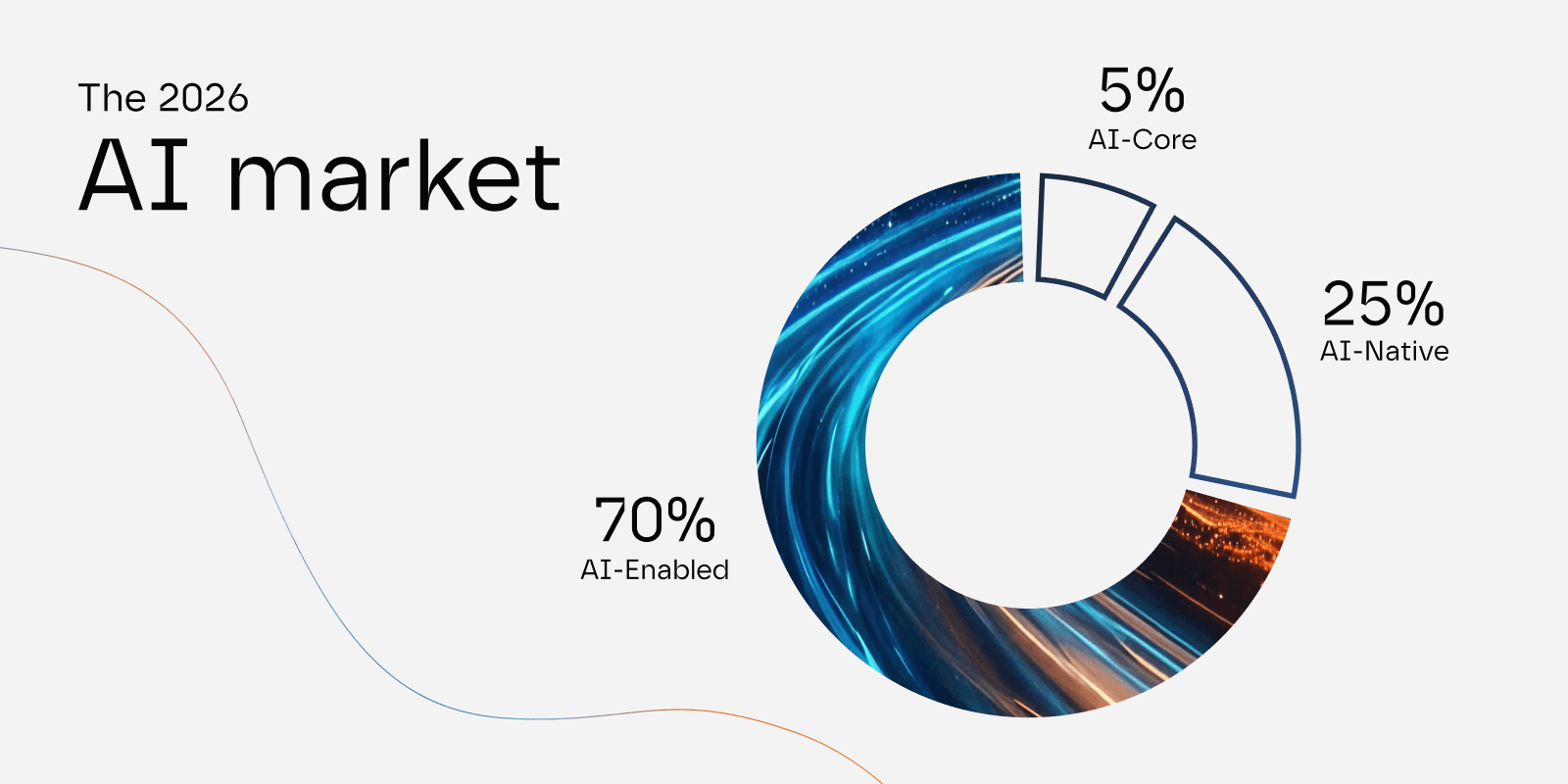
El núcleo de IA del 5%: soberanía fundamental
Esas son las empresas que construyen la infraestructura fundamental de la era de la inteligencia. Estas son las bases: los proveedores de modelos, los diseñadores de semiconductores y los operadores de hiperescala. Representan la «capa de soberanía» de la economía global.
- Modelos de negocio: Estas empresas utilizan licencias de procesamiento de alta densidad y modelo como servicio (MaaS). Los laboratorios de Frontier han pasado de la investigación a plataformas comerciales masivas que utilizan modelos de uso basados en tokens.
- La restricción: El cuello de botella ha pasado del suministro de silicio a la disponibilidad de energía. Se prevé que las necesidades informáticas mundiales alcancen los 200 GW en 2030, lo que desembocará en iniciativas denominadas «Bring Your Own Power» (BYOP), en las que los hiperescaladores invierten directamente en energía nuclear.
- La ventaja competitiva: Los fosos aquí se basan en la escala de cálculo y en el diseño conjunto de hardware y software. El acceso a enormes volúmenes de GPU crea una barrera que los jugadores más pequeños no pueden sortear. Estas empresas son las artífices del modelo de «inteligencia como servicio». Definen los límites de costo y rendimiento para el resto del mercado.
Algunos de los líderes del mercado incluyen:
- Laboratorios modelo básicos: IA abierta (último modelo: GPT-5), Antrópico (Claudio), eje I (Grok), y Mistral IA (el principal impulsor europeo de los modelos de IA).
- Infraestructura de hiperescala: Microsoft (IA de Azure), AWS, Google Cloud, y Nube de Oracle.
- Gigantes del hardware y el silicio: NVIDIA (GPU Blackwell/H100), AMD (serie Instinct MI300) y TSMC (el principal fabricante de chips de IA).
- ASIC e inferencia especializada: GROQ (LPU para inferencia de baja latencia), Cerebras (formación a escala de oblea; colaboración con OpenAI), y Qualcomm (IA integrada en el dispositivo para dispositivos móviles y ordenadores).
El 25% nativo de la IA: creado pensando primero en la IA
El segmento nativo de la IA incluye empresas creadas desde cero con la IA como tecnología principal. Si se eliminara la IA, la empresa dejaría de existir. Su software ejecuta flujos de trabajo complejos de forma autónoma, en lugar de limitarse a almacenar datos.
- Economía basada en los resultados: Las empresas nativas de la IA se están alejando de las suscripciones basadas en asientos y optando por precios basados en los resultados. Dado que estos sistemas sustituyen al trabajo humano, el valor se mide en función de las tareas completadas.
- Superando el SaaS tradicional: Estas empresas emergentes se adaptan al mercado de productos 2,4 veces más rápido que las empresas de software tradicionales. Las empresas exitosas en fase inicial generan más de 2,5 millones de dólares en ingresos por empleado con equipos de menos de 50 personas.
- Profundidad vertical: La defensibilidad proviene de una profunda experiencia en el campo. Al integrar la inteligencia artificial en rutinas diarias específicas (como Harvey para el trabajo legal, ElevenLabs para la síntesis de voz o SolveAI para la creación de software empresarial), obtienen una mayor ventaja operativa, lo que dificulta el cambio una vez implementada.
- Ventaja competitivae: Estas empresas se construyen «priorizando la IA». La generación aumentada por recuperación (RAG) * es su principal ventaja competitiva.
Algunas de las empresas nativas de IA líderes del mercado incluyen:
- Desarrollo de software: Cursor (codificación AI), Copiloto de GitHub (programación de IA),Cero verdadero (aplicaciones basadas en datos), Laboratorios Pi (Aplicaciones de IA: fueron adquiridas por Microsoft) y Resolver IA (Desarrollo de software empresarial dirigido por IA)
- Verticales sectoriales: Harvey (IA legal), Un puente y Ambiente (Abonos de atención médica) y Escale la IA (Infraestructura de etiquetado de datos), Concéntrate (investigación y desarrollo para el sector de la salud).
- Ventas, marketing y crecimiento: Twilio (interacción con el cliente basada en inteligencia artificial), HubSpot (automatización de marketing integrada), Once laboratorios (síntesis de voz) y Videext (generación de vídeo).
* ¿Qué es RAG?
El RAG es un sistema que mejora el contexto de un LLM, mejorando sus respuestas. Extrae información reciente y relevante de fuentes confiables y la usa para generar su respuesta. Esto significa que el modelo de IA puede aumentar sus datos de entrenamiento con nuevos conocimientos y proporcionar respuestas más precisas y adaptadas al contexto, lo que mejora la atención al cliente, el análisis de mercado y la gestión del conocimiento.
El 70% habilitado para la IA: desde los diseñados para el futuro hasta los más rezagados
El segmento habilitado para la IA consiste en empresas que incorporan la IA a los procesos existentes para impulsar la eficiencia interna. Aquí es donde la «brecha de valor de la IA» es más visible*.
- Eficiencia como turbocompresor: Para estas empresas, la IA es un complemento. El modelo de negocio, por ejemplo, vender seguros o fabricar automóviles, sigue siendo el mismo. El objetivo es la eficiencia interna, como la reducción de residuos, el ahorro de tiempo, etc.
- Reducción de costos, aumento de la eficiencia: El principal beneficio económico es el uso de la IA para reducir el costo de la prestación de los servicios existentes.
- Luchas de transformación: La principal carga para estas empresas es modernizar las pilas de datos heredadas. Deben pasar de silos fragmentados a arquitecturas unificadas antes de que la IA sea efectiva.
Algunas de las principales empresas habilitadas para la IA incluyen:
- Finanzas y banca: Morgan Stanley (asistentes de investigación de IA), Goldman Sachs (redacción automatizada de prospectos de OPI), Mastercard (modelos tabulares grandes para la detección del fraude), North.cloud (AI Copilot Noros para tecnología financiera) y A2R (IA para la educación).
- Comercio electrónico y venta minorista: Walmart, Amazon (catálogos personalizados orientados al cliente) y Klarna (desviando el 66% de los chats de servicio al cliente a través de la IA).
- Tecnología heredada y SaaS: Fuerza de ventas (Fuerza de agentes), Adobe (Luciérnaga).
- Industria y salud: BMW (gemelos digitales a través de NVIDIA Omniverse), Toyota (diseño generativo de automóviles).
Estas empresas aprovechan eficazmente la IA para hacer crecer sus negocios en 2026. Las que no lo hagan, lo más probable es que se queden atrás, atrapadas en la brecha de valor de la IA.
* ¿Qué es la brecha de valor de la IA?
La brecha de valor de la IA se puede definir como la brecha entre las empresas que utilizan eficazmente la IA para aumentar su ROI y las que fracasan hacerlo, lo que se traduce en una disminución de los ingresos y la eficiencia y, en última instancia, en una disminución del valor.
Únicamente El 5% de las empresas obtienen un valor sustancial de la IA; Boston Consulting Group (BCG) se refiere a ellos como construido para el futuro empresas. Están a la vanguardia de la innovación en inteligencia artificial, creando sistemáticamente capacidades de inteligencia artificial de vanguardia en todas las funciones y generando un valor sustancial de manera constante. Están optando por flujos de trabajo híbridos basados en la colaboración entre humanos e inteligencia artificial, respaldados por la mejora de las habilidades, la gobernanza, las barreras y las asociaciones. Se espera que esas empresas generen 1,7 veces más crecimiento de los ingresos.
35% de las empresas han desarrollado un Estrategia de IA y capacidades avanzadas, escalándolos de manera efectiva y comenzando a generar valor.
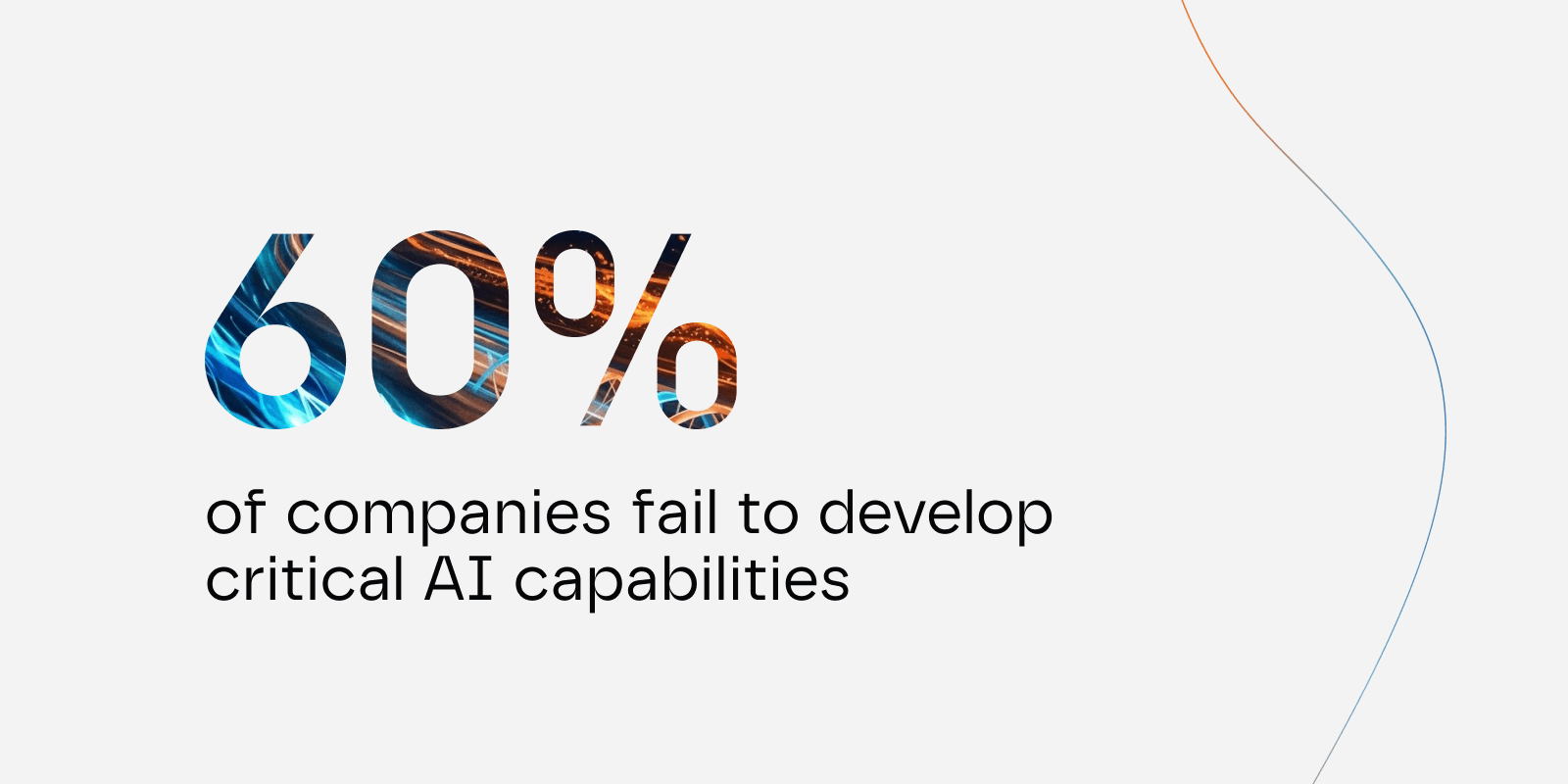
Sin embargo, El 60% de las empresas no logran desarrollar capacidades críticas de IA. Esos rezagados (BCG) han tomado poca o ninguna medida con respecto a la IA y son propensos al estancamiento. Los rezagados carecen de capacidades fundamentales y casi no generan valor, por lo que corren el riesgo de quedar atrapados en un ciclo de pérdida de terreno.
Marca inteligente para productos inteligentes
La dinámica del mercado está cambiando, pero la importancia de la marca seguirá siendo la misma en 2026: los productos inteligentes merecen marcas inteligentes. Y mientras todo el mundo habla de «IA», ha llegado el momento de revisar la forma en que tu empresa de IA habla y se ve realmente.
Tendencias de diseño muestran que hay una enorme movimiento de regreso a un diseño más humano, con elementos nostálgicos y offline. Las mascotas de marca para las herramientas de inteligencia artificial vuelven a estar de moda, y hacen que las herramientas de inteligencia artificial sean más accesibles y empáticas.
Apple, por ejemplo, ha despertado actualmente el interés por el diseño al publicar una pista sobre cómo podría ser el futuro «Lil Finder Guy» (la aplicación de búsqueda). Apareció en un vídeo de TikTok sobre el lanzamiento de un nuevo Macbook. Los expertos en tecnología se preguntan si podría ser el futura mascota de Apple Intelligence.
Independientemente de la forma en que tu empresa aproveche la IA, su base técnica debe ir acompañada de una marca estratégica que comunique su inteligencia.
Fuentes y lecturas adicionales:
https://media-publications.bcg.com/The-Widening-AI-Value-Gap-October-2025.pdf
https://www.meilisearch.com/blog/rag-for-business
https://eu.usatoday.com/story/tech/2026/03/10/apple-lil-finder-guy-social-media/89080445007/